

Nail Bonder Explained: 7 Steps to Gel Nails That Never Lift
You prepped carefully, painted neatly and cured every layer, yet your gel still peeled away by the weekend. Frustrating, is it not? More often than not, the missing piece is a nail bonder, the quiet, almost invisible step that decides whether your manicure holds for three weeks or three days. If you have never quite understood what a bonder does, when to use it or how it differs from a primer, this guide clears it all up. Read on and you will finally know how to make gel grip properly, every single time.
A nail bonder is a preparation product that helps gel and acrylic stick firmly to the natural nail by removing oil, balancing the nail's pH and creating a grippy surface. Used after cleansing and dehydrating, a thin layer of nail bonder is the difference between a manicure that lasts weeks and one that lifts within days. Choose acid free for sensitive nails, apply sparingly, and never let it touch the skin.
On this page
- What a nail bonder actually is
- Nail bonder vs primer vs dehydrator
- Acid or acid free nail bonder: which to choose
- How to use a nail bonder step by step
- Common nail bonder mistakes that cause lifting
- Do you always need a nail bonder?
- What years at the nail desk taught me about bonder
- Your nail bonder questions, answered
What a Nail Bonder Actually Is
Let us start with the fundamentals, because the word bonder gets used loosely and that causes half the confusion. A nail bonder is a preparation liquid designed to improve adhesion between your natural nail and whatever goes on top, whether that is gel polish, hard gel or acrylic. It works on a molecular level to create a stronger link between the keratin of your nail plate and the product you apply, which is exactly why it matters so much for a lasting gel manicure.
Understanding what your nail is actually made of explains why a bonder is needed. Your natural nail is porous and carries its own oils and moisture, and gel simply will not grip a surface that is greasy or damp. Think of it like trying to stick tape to a slightly oily plate. A quality bonder removes that barrier and, depending on the formula, either penetrates the surface a little or leaves a tacky, receptive layer that the base coat can lock into.
There is a strengthening angle too, which many people miss. Bonders that partially penetrate the nail plate can increase the strength of the whole structure once cured, which lengthens how long your enhancement stays put. Rather than sitting on top like a sticker, the product becomes part of an integrated chain running from the nail through the bonder into the gel, and that chain is what resists the daily bending and knocks your hands take.
The result of getting this stage right is the manicure everyone wants, glossy, secure and still immaculate at removal. Skipping it, on the other hand, is one of the most common reasons a set fails early. If you have battled with peeling before, our full guide to why gel nails lift pairs neatly with this one, but the short version is simple: a good nail bonder is where lasting adhesion begins.

Nail Bonder vs Primer vs Dehydrator
Here is where most people get tangled, because a nail bonder, a primer and a dehydrator all promise better adhesion and yet each works differently. Sorting them out makes your prep far more effective. A dehydrator does one job well, stripping surface oil and moisture from the plate so the nail turns a chalky matte white, removing the water and grease that sabotage grip before anything else is applied.
A primer takes the next step, and it comes in two families. Acid primers gently etch the surface to create microscopic pores, essentially roots for the gel to lock into, while acid free primers leave a tacky bonding layer without etching, which is kinder to sensitive nails. Both improve the physical link between plate and product, but they achieve it in very different ways, and knowing which you are holding matters for the health of the natural nail.
So where does a bonder sit in all this? Confusingly, the term overlaps with both. Many bonders, sometimes labelled pH bond, act like a deep cleaner that removes oil and balances the nail's pH to create a perfectly clean, receptive surface, while others double as a bonding base. Some products combine cleansing and bonding in a single step, which is why a good prep and bonder range is worth understanding properly rather than guessing at the bottle in your kit.
The practical takeaway is reassuring. You rarely need all three separate products stacked together, since there are no extra benefits from layering them needlessly, but you do need the right combination for your system. A dependable chain runs from a clean, dehydrated nail through a bonder or primer into your base gel and colour, and following the manufacturer's recommended sequence for your chosen brand beats mixing random products every time.
Acid or Acid Free Nail Bonder: Which to Choose
Once you understand the categories, the choice between an acid and an acid free nail bonder becomes far less intimidating. The distinction matters because it affects both how strongly your gel grips and how gentle the process is on your nails. Acid based formulas, which usually contain methacrylic acid, work by lightly etching the nail surface to maximise mechanical adhesion, and they are traditionally favoured for acrylic systems and stubborn lifters.
Acid free options tell a gentler story. Rather than etching, they use milder chemistry to create a sticky, receptive surface that the gel bonds to organically, without roughening or thinning the natural nail. For gel polish and for anyone with soft, sensitive or already fragile nails, an acid free bonder is usually the wiser choice, offering strong adhesion while preserving nail health. Many modern professionals have moved away from harsh acids precisely because well prepped nails no longer need them.
There is a hybrid worth knowing about too. Low acid bonders sit between the two camps, delivering a firm bond with less dryness than a full acid primer, which makes them a sensible option for clients whose gel tends to lift but who cannot tolerate aggressive products. Choosing between these comes down to your nail type, your enhancement system and how prone you are to lifting, rather than one option being universally better.
Whichever you reach for, compatibility is the golden rule. Manufacturers design and test their bonders to work with their own base gels and colours, so a bonder from the same system as your gel polish will almost always outperform a random mix of brands. If you are building a home setup from scratch, a coordinated gel polish starter kit takes the guesswork out by pairing prep, bonder, colour and lamp that are meant to be used together.

How to Use a Nail Bonder Step by Step
Applying a bonder correctly is genuinely simple once you know the sequence, and this is the part that transforms a wobbly home manicure into a salon standard one. Begin with proper nail prep: push back and tidy the cuticles, gently remove any clinging cuticle skin, then lightly buff the surface to take off the natural shine. This clean, matte starting point is what allows everything that follows to grip.
Cleansing and dehydrating come next. Wipe each nail with a lint free pad to remove dust and residue, then apply a dehydrator or cleanser so the plate turns chalky and dry, which confirms the oil and moisture are gone. Only now is the nail ready for the bonder itself, and timing matters here because washing your hands or applying hand cream at this stage would quietly undo your work.
Apply the nail bonder thinly and only to the natural nail. A single sparing layer is all you need, brushed across the plate and, for extra security against peeling, dabbed along the free edge where lifting so often starts. Keep it well away from the cuticles and sidewalls, since bonder on the skin causes the very lifting you are trying to prevent. Depending on the product, you then either let it air dry for around ten to fifteen seconds until the surface turns matte, or cure it briefly under a UV/LED lamp, so always follow your specific formula's instructions.
Once the bonder is ready, build the rest of your manicure as usual. Apply a thin gel base coat and cure, then your colour in thin layers, capping the free edge each time, and finish with a durable no wipe top gel, or a soft matte top, for gloss and protection. That complete chain, clean nail to bonder to base to colour to top, is the professional secret behind a set that simply refuses to lift, and it works just as well on adventurous gel polish designs as on a simple neutral.
Common Nail Bonder Mistakes That Cause Lifting
Even with the right product, small errors undo all its good work, so it helps to know the traps before they catch you. The most frequent mistake is overapplication. A bonder needs the lightest touch, because a thick, flooded layer will not dry or cure properly and leaves a soft film that actively encourages peeling. Less really is more here, and one thin, even coat outperforms a generous one every time.
Letting the product wander onto the skin is the next common slip. Bonder or primer that touches the cuticle, sidewalls or surrounding skin creates a weak edge that lifts as soon as your nails start moving, and it can irritate the skin with repeated contact. Precision matters, so keep every prep product on the nail plate alone, leaving a hair's breadth margin around the edges exactly as you would with the colour itself.
Applying bonder over the wrong surface trips people up as well. It belongs on the clean natural nail, not over old product during an infill, and putting it anywhere else simply wastes it and weakens the bond. Reintroducing oil is another quiet saboteur, whether from touching your face or hair after prepping or from applying cuticle oil too early, which is why oil always goes on after the manicure is finished, never before or during.
Finally, curing and timing errors cost many a manicure. A bonder that should air dry to matte but gets rushed, or one that needs a lamp but is left uncured, leaves the whole structure compromised from the base up. Give each product the exact time and method it asks for, and remember that a nail bonder is only as good as the prep beneath it. Get all of these small details right and lifting becomes a rare event rather than a monthly disappointment.

Do You Always Need a Nail Bonder?
It is a fair question, and the honest answer is that it depends on your nails and your goal. Not every system explicitly requires a separate bonder, and some base gels are formulated to act as the bonding step themselves, which is why certain brands tell you to go straight from a cleanser to their base. For someone with healthy, low oil nails doing a simple gel polish manicure, a thorough cleanse and a good base coat can sometimes be enough.
That said, most people benefit from using one. If your nails run oily, if you live an active life that is hard on your hands, or if you have ever struggled with early lifting, a bonder is the single most effective upgrade you can make to your prep. It addresses the root cause of most peeling, poor adhesion, rather than trying to patch the symptoms after the fact, and that is why so many professionals reach for one as standard.
Your enhancement type shapes the decision too. Acrylic and hard gel extensions place far more stress on the bond than a coat of colour, so a bonder or primer becomes close to essential for those services, and it is equally valuable for anyone wearing longer artificial nails that lever against the natural plate. The heavier the enhancement, the more the adhesion chain has to work.
When in doubt, follow your product system and listen to your nails. If a set lasts three weeks without lifting, your current routine is working and you may not need to add anything. Should it peel early despite careful application, a suitable nail bonder is almost always the answer, and a matched gel polish set that includes coordinated prep makes getting it right far easier. You can even browse real results in the customer reviews to see how much difference proper prep makes.
What Years at the Nail Desk Taught Me About Bonder
For a long time I treated bonder as an optional extra, a fussy step I could skip when I was running behind. My reasoning felt sound at the time, since my sets usually looked perfect leaving the desk, and I told myself the extra bottle was a luxury rather than a necessity. The clients who came back with peeling corners a week later slowly proved me wrong.
The moment it clicked involved a lovely regular whose gel never lasted, no matter which polish I used. In frustration I went back to basics with her, dehydrating properly and adding a thin acid free nail bonder that I had previously dismissed. Three weeks later her set was flawless, and I felt a little foolish for having overlooked something so simple for so long. That single change fixed a problem I had been blaming on everything else.
Since then I never skip it, and I explain to every nervous home user that a nail bonder is not an upsell, it is insurance. The few extra seconds it takes are nothing compared to redoing a lifted set, and the confidence of knowing your manicure will hold changes how you enjoy it. Prep, I have learned, is where good nails are quietly won or lost, and bonder is the part of prep people skip at their peril.

Your Nail Bonder Questions, Answered
What does a nail bonder do exactly?
A nail bonder improves adhesion between your natural nail and the gel or acrylic on top. It removes oil, often balances the nail's pH and creates a grippy or tacky surface so the product locks on. That stronger bond is what stops a manicure lifting and peeling before its time.
Is a nail bonder the same as a primer?
Not quite, though the terms overlap. A dehydrator removes oil and moisture, a primer etches or provides a tacky bonding layer, and a bonder often cleans and balances pH while promoting adhesion. Some products combine these roles, so always check what your specific bottle is designed to do.
Do I need an acid or acid free nail bonder?
For gel polish and sensitive or fragile nails, an acid free nail bonder is usually the gentler, safer choice while still giving strong adhesion. Acid based formulas suit acrylics and very stubborn lifters. A low acid hybrid sits in between if you need extra grip without the harshness.
Where do I apply nail bonder?
Only on the clean, dehydrated natural nail, never on the skin, cuticles or over old product. Use one thin layer and dab a little along the free edge for extra hold. Keeping it off the surrounding skin prevents both irritation and the lifting that bonder on skin can cause.
Can I use gel polish without a nail bonder?
Sometimes, yes. Healthy, low oil nails with a good base coat can hold a simple manicure, and some systems use their base as the bonding step. However, if your nails are oily, active or prone to lifting, a nail bonder dramatically improves how long the set lasts.
Does nail bonder damage your nails?
Used correctly, no. Acid free formulas are gentle and preserve nail health, while even acid primers are safe in tiny, precise amounts on the plate. The damage people report almost always comes from picking off gel, not from a properly applied bonder that keeps the set intact until proper removal.
Bringing Your Nail Bonder Routine Together
The pattern behind lasting gel is consistent: clean the nail, dehydrate it, then let a well chosen nail bonder create the grip that everything else builds on. Match the formula to your nails, apply one thin layer only on the plate, keep it off the skin and follow the drying or curing your product asks for. Do that and lifting stops being inevitable, leaving you free to enjoy weeks of secure, glossy nails and explore more looks on our nail blog. A nail bonder is a small step, but it is the one that quietly holds the whole manicure together.

You booked the holiday, bought the linen dress, and now you are staring at a wall of polish wondering whether nude is too safe for the season. Here is the honest answer. Nude nails summer 2026 are not the boring option, they are the clever one. This is the shade family that flatters a fresh tan, survives a full beach day, photographs beautifully at a wedding, and still looks right the moment you walk back into the office on Monday. Stay with me and you will know exactly which nude belongs on your hands.
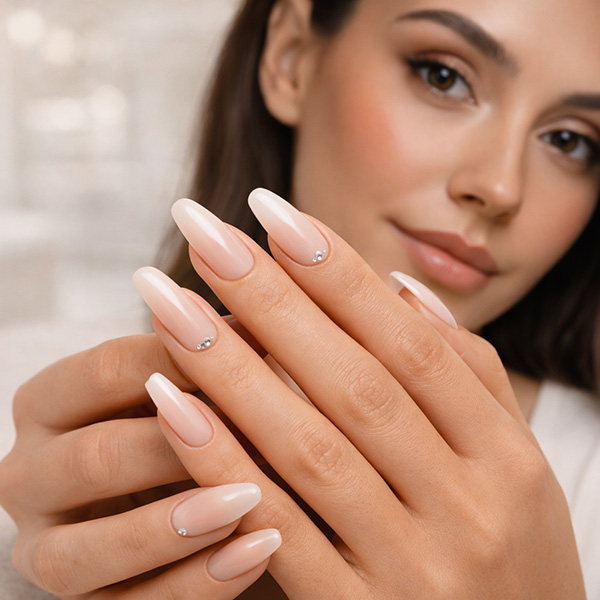
You spent time and money on a beautiful gel manicure, it looked glossy and perfect leaving the salon, and three days later a corner is already peeling away from your thumb. Frustrating does not quite cover it. If you keep noticing your gel nails lifting long before they should, the good news is that the cause is almost never bad luck or a bad polish. Lifting follows a small set of predictable mistakes, and once you understand them you can stop it happening again. This guide walks through exactly why it starts and how to make every set last.

You have booked the appointment, you love the idea of pretty nails, and then you sit in the chair with absolutely no idea what to ask for. Sound familiar? Choosing gel polish designs can feel oddly stressful for something meant to be fun, especially when your feed is full of looks you could never picture on your own hands. This guide fixes that. Here you will find the gel polish designs actually worth wearing in 2026, matched to your nails, your life and your skill level, so your next set feels like a decision rather than a gamble.
