
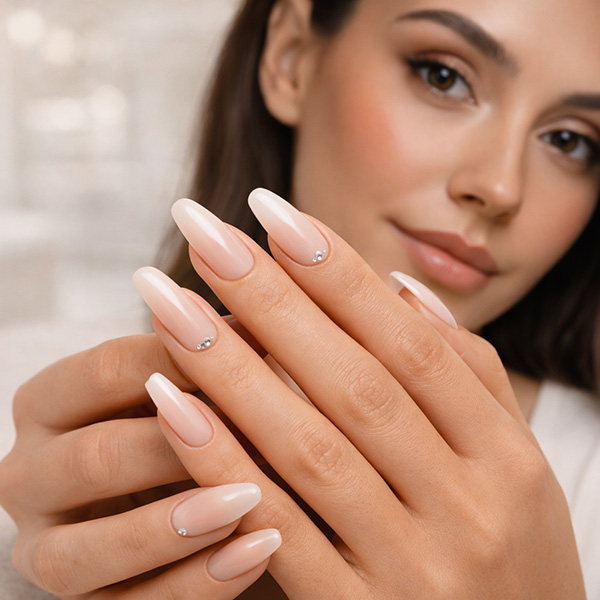
Gel Nails Lifting Early? 9 Real Reasons and How to Make Them Last
You spent time and money on a beautiful gel manicure, it looked glossy and perfect leaving the salon, and three days later a corner is already peeling away from your thumb. Frustrating does not quite cover it. If you keep noticing your gel nails lifting long before they should, the good news is that the cause is almost never bad luck or a bad polish. Lifting follows a small set of predictable mistakes, and once you understand them you can stop it happening again. This guide walks through exactly why it starts and how to make every set last.
Gel nails lifting early is almost always down to preparation, application and aftercare rather than the polish itself. Oil or moisture on the nail, hidden cuticle skin, thick coats, undercuring, an unsealed free edge and everyday habits like hot water and picking are the usual culprits. Proper prep with a dehydrator and primer, thin cured layers, a capped edge and gentle aftercare keep gel firmly in place for weeks.
On this page
- What gel nails lifting really means
- The number one cause of gel nails lifting
- Application mistakes that make gel nails lift
- Everyday habits that cause gel nails to lift
- How to stop gel nails lifting for good
- When gel nails lifting signals something more
- What years at the nail desk taught me about lifting
- Your gel nails lifting questions, answered
What Gel Nails Lifting Really Means
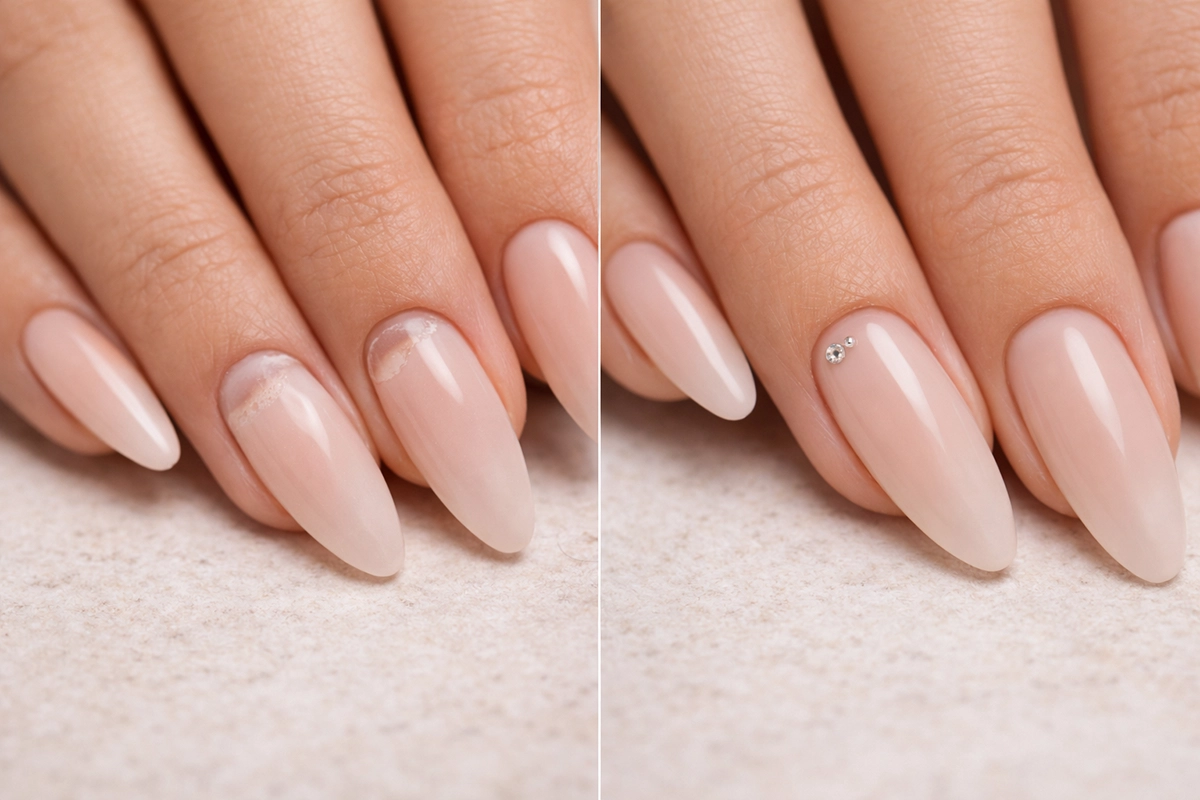
Before you can fix a problem it helps to name it precisely. Gel nails lifting describes the moment the cured gel loses its grip on the natural nail and starts to separate, whether that shows up as a peeling corner, a whole sheet coming away after two days, or a small gap at the cuticle that catches on your jumper. It is different from ordinary chipping at the tip, though the two often arrive together and share the same underlying causes.
Understanding the mechanics makes everything that follows clearer. Gel polish bonds to the keratin of the nail plate, not to skin, oil or moisture, and it only stays put while that bond remains intact. Anything that sits between the gel and the nail, a film of natural oil, a trace of hand cream, a sliver of leftover cuticle skin, quietly sabotages that grip. The set may look flawless when you leave the mirror, then begin lifting within days as the barrier does its damage from underneath.
There is a nail health angle too, which is why this matters beyond appearance. When a lifted pocket forms between the gel and the plate, moisture and bacteria can collect in that warm gap, and picking at the loose edge tears away layers of your own nail. So gel nails lifting is not only a cosmetic annoyance, it is a small structural failure worth solving properly rather than patching over.
The reassuring part is how consistent the causes are. Nail professionals see the same short list again and again, and almost every case traces back to preparation, application technique, curing or aftercare. Work through those four areas and you address the root of nearly every lifting problem, which is exactly what the rest of this guide does, starting with the single biggest offender.
The Number One Cause of Gel Nails Lifting
If you take one thing from this article, make it this: poor preparation is the leading reason for gel nails lifting, and no polish on earth survives a weak foundation. Your natural nails are porous and naturally full of oil and moisture, and applying gel over that is a little like sticking tape to a greasy plate. It clings for a moment, then slides away. Proper prep removes that barrier so the gel can grip bare keratin.
Two hidden culprits do most of the damage. The first is surface oil and water, which is why professionals dehydrate the plate until it turns chalky white before any product goes on. A quality prep liquid, dehydrator and primer routine strips that film and balances the nail's pH so the base coat can bond, and skipping it is the fastest route to early gel nails lifting. Washing your hands right before application, or applying hand cream that morning, quietly reintroduces the very oils you need gone.
The second culprit is nearly invisible. A thin, transparent layer of cuticle skin, known as pterygium, often clings to the nail plate even after you push the cuticles back. You cannot always see it, but gel painted over that skin bonds to the skin rather than the nail, and as your natural oils seep through, the whole edge separates. Gently removing this layer with careful buffing or a professional tool is what nail artists mean when they talk about a truly clean nail.
Filing and buffing complete the picture. Lightly removing the natural shine gives the gel a slightly textured surface to key into, much as a decorator sands a wall before painting. The aim is a clean, dry, matte plate with no oil, no moisture and no clinging skin, sealed with a proper base coat. Get this stage right and you have already prevented the majority of gel nails lifting before you have even opened a colour.
Application Mistakes That Make Gel Nails Lift
Flawless prep can still be undone at the brush, so application deserves the same care. The most common error is greed with the gel: thick, generous coats look smooth going on but cure unevenly, hardening on top while staying soft underneath. As your nail flexes through the day that soft layer gives way and the whole thing begins peeling. Thin, controlled coats cure fully through, build real strength and are the single easiest fix for gel nails lifting at home.
Where the gel lands matters just as much as how thick it is. Product that floods the cuticle or pools along the sidewalls creates a weak, thick edge that catches and lifts the moment your nails start moving, and even a tiny overlap onto the skin can start peeling within days. Gel should sit neatly on the nail plate with a hair's breadth gap from the surrounding skin, never touching the cuticle. Tidy, deliberate placement beats a rushed flood every time.
Curing is where home sets quietly fail. Each layer needs its full time under a lamp that actually matches the gel formula, since an undercured base stays soft and lets everything above it shift and separate. Darker, more pigmented shades and thicker builder gels need longer cures than a sheer nude, so a reliable UV/LED lamp and correct timing are non negotiable. A complete gel polish starter kit pairs a compatible lamp with the base, colour and top you need so nothing is left half set.
The finishing details seal the deal, quite literally. Capping the free edge, that is running a thin line of colour and top coat along the very tip of the nail, wraps the design and dramatically cuts the chipping and gel nails lifting that start at the end. A dedicated gel base coat gives the colour something to bond to, while a quality no wipe top gel, or a matte top coat for a softer look, locks the whole structure in and keeps daily wear from creeping underneath.
Everyday Habits That Cause Gel Nails to Lift
Even a perfectly applied set can start lifting because of what happens after you leave the salon, so your daily routine is the next place to look. Water is the quiet villain. Long hot baths, washing up without gloves and frequent hand washing all cause the nail to swell and contract, and that constant movement gradually breaks the seal between gel and plate. Switching to lukewarm water and wearing rubber gloves for cleaning protects against gel nails lifting far more than most people expect.
Timing your cuticle oil correctly is another small habit with a big payoff. Oil is essential for healthy, flexible nails, but applying it to freshly prepped nails before the gel goes on reintroduces the exact film you worked to remove. The rule is simple: oil goes on after your manicure is finished and cured, never during prep, so it nourishes the surrounding skin without ever getting between the gel and the nail.
Then there is the habit everyone knows they should break. Picking or peeling at a lifted corner feels satisfying for a second and damages your nails for months, because it tears away the top layers of keratin along with the gel and leaves a thin, weak plate that the next set struggles to grip. When gel nails lifting tempts you to pick, the kindest thing you can do is resist and book a proper removal instead.
Removal itself is part of the story. Forcing or prying gel off strips the nail and all but guarantees the next set lifts early, whereas soaking the gel in genuine acetone until it slides away keeps the plate intact. Giving your nails an occasional short break between sets lets them rebuild their natural oils and strength too, which quietly improves adhesion for every manicure that follows. If you love a low maintenance neutral for those in between weeks, our guide to nude nails for summer is full of gentle, wearable ideas.
How to Stop Gel Nails Lifting for Good
Pulling it together, stopping gel nails lifting is a sequence rather than a single trick, and it starts before any colour appears. Begin by tidying the cuticles, gently removing that hidden pterygium skin and lightly buffing away the natural shine, then dehydrate and prime until the plate is chalky and clean. This clean, dry, matte foundation is where lasting adhesion is won or lost, so it deserves patience rather than a quick swipe.
Build the colour with restraint. Two or three thin coats, each fully cured under a matched UV/LED lamp, outperform one thick layer every time, and capping the free edge on every coat seals the vulnerable tip. Keep the gel off the skin, leaving a fine margin around the cuticle and sidewalls, and finish with a proper base and a durable top coat so the structure is sealed from both ends. None of this is difficult, it simply asks for a little more care than rushing through.
Choosing reliable products removes a whole category of problems. A coordinated system, where base, colour and top are designed to work together, bonds far better than a random mix of brands, which is why a matched gel polish set or a full starter kit is such a sound investment for home users. Quality HEMA aware formulas from a trusted gel polish range also cure more predictably and grip more consistently than cheap, unbranded pots, as the customer reviews consistently show.
Aftercare keeps your hard work intact. Daily cuticle oil worked into the skin keeps nails flexible so the gel moves with them instead of cracking, gloves protect the seal during chores, and lukewarm water spares the bond. When you are ready to change your look, soak the gel off gently and start the sequence again. Once you have the prep to aftercare cycle right, you can even enjoy adventurous gel polish designs knowing the base beneath them will hold for weeks.
When Gel Nails Lifting Signals Something More
Most lifting is mechanical and entirely fixable, but occasionally it points to something worth taking seriously, so it helps to know the difference. If your natural nails are weak, thin or damaged, often from previous picking or aggressive removal, gel simply has less healthy keratin to hold onto and will lift more readily. In that case the answer is a period of recovery, gentle care and cuticle oil, sometimes with a break from nail enhancements, rather than another rushed set.
Repeated, stubborn lifting across every finger despite careful prep can occasionally hint at a sensitivity to ingredients in the product, particularly with cheaper or poorly cured gels. A genuine reaction usually brings other signs alongside the lifting, such as redness, itching, soreness or the skin around the nail becoming tender. These symptoms are not the same as ordinary peeling and deserve attention rather than another coat of colour over the top.
This is the point where professional judgement matters. A qualified nail technician can assess whether the issue is prep, product, technique or your nail health, and can spot early signs of infection in a lifted pocket that an untrained eye would miss. If lifting is accompanied by discolouration, pain, swelling or a persistent gap that traps moisture, it is sensible to see a professional or a medical practitioner rather than continuing at home.
None of this should put you off gel, which remains one of the safest, longest lasting options when applied and removed correctly. The overwhelming majority of gel nails lifting is a straightforward prep or aftercare fix, and the small minority that is not is exactly why listening to your nails matters. Treat persistent problems as information rather than an inconvenience, and you protect both your manicures and the natural nails underneath them.
What Years at the Nail Desk Taught Me About Lifting
For a long time I quietly blamed my products whenever a client came back with a peeling corner. I switched brands, chased more expensive bases and convinced myself the polish was letting me down, when the honest truth was that I was rushing the least glamorous part of the job. My prep was good enough to look fine in the chair and not good enough to last a fortnight.
The lesson landed with one regular client whose sets never made it past a week no matter what I used. Out of stubbornness I slowed everything down for her, spending twice as long removing every trace of cuticle skin, dehydrating properly and applying the thinnest coats I had ever done. She came back three weeks later with the set still immaculate, and I realised the variable had never been the bottle, it had been the fifteen minutes of care before it.
Since then I treat preparation as the whole job rather than the boring bit before the fun starts. I tell every nervous home user the same thing, that gel nails lifting is a message about foundation, not a verdict on their skill, and that fixing the prep fixes almost everything. Slowing down at the start is the single change that transformed my work, and it is the advice I would hand anyone struggling to make a set last.
Your Gel Nails Lifting Questions, Answered
Why do my gel nails keep lifting after only a few days?
Early lifting almost always points to prep. Oil or moisture left on the nail, a hidden layer of cuticle skin, or gel touching the surrounding skin all stop the product bonding to the keratin. Thorough dehydration, a primer and keeping gel off the skin usually solve it.
Does gel nails lifting damage my natural nails?
The lifting itself is not the main danger, but picking at a lifted edge is, because it tears away layers of your natural nail. Moisture and bacteria can also gather in a lifted pocket, so it is best to have a lifting set removed and reapplied properly rather than left to worsen.
Can I fix a lifting gel nail at home without redoing the whole set?
A small lifted area is best not patched, since sealing over a gap traps moisture underneath. Gently filing the loose edge smooth can buy you a day or two, but the lasting fix is soaking that nail off and reapplying with proper prep rather than gluing the lift back down.
Does hot water really make gel nails lift?
It genuinely can. Hot water and frequent soaking make the nail swell and contract, which slowly breaks the seal between gel and plate. Using lukewarm water, wearing gloves for washing up and keeping baths shorter all help a manicure last noticeably longer.
Is gel nails lifting a sign of an allergy?
Usually not, as most lifting is mechanical and prep related. However, stubborn lifting on every finger alongside redness, itching or soreness around the nails can signal a sensitivity, especially with poorly cured product. If those symptoms appear, stop and see a qualified professional.
How long should gel nails last before any lifting?
A well prepped, well applied gel set should stay put for two to three weeks with no lifting, growing out neatly rather than peeling. If yours consistently lift before then despite good aftercare, prep or curing is almost certainly the area to revisit.
Keeping Gel Nails Lifting a Thing of the Past
The pattern behind gel nails lifting is remarkably consistent: it starts with the foundation and ends with aftercare. Prepare the nail until it is clean, dry and matte, remove every trace of oil and hidden skin, apply thin cured layers, cap the free edge and seal with a quality top coat, then protect the set with gloves, lukewarm water and daily oil. Do that and lifting stops being an inevitability and becomes a rare, easily corrected event, leaving you free to enjoy weeks of flawless nails and explore more looks on our nail blog.

You booked the holiday, bought the linen dress, and now you are staring at a wall of polish wondering whether nude is too safe for the season. Here is the honest answer. Nude nails summer 2026 are not the boring option, they are the clever one. This is the shade family that flatters a fresh tan, survives a full beach day, photographs beautifully at a wedding, and still looks right the moment you walk back into the office on Monday. Stay with me and you will know exactly which nude belongs on your hands.

You have booked the appointment, you love the idea of pretty nails, and then you sit in the chair with absolutely no idea what to ask for. Sound familiar? Choosing gel polish designs can feel oddly stressful for something meant to be fun, especially when your feed is full of looks you could never picture on your own hands. This guide fixes that. Here you will find the gel polish designs actually worth wearing in 2026, matched to your nails, your life and your skill level, so your next set feels like a decision rather than a gamble.
